
Braces vs Clear Aligners: Which May Suit You?
.avif)
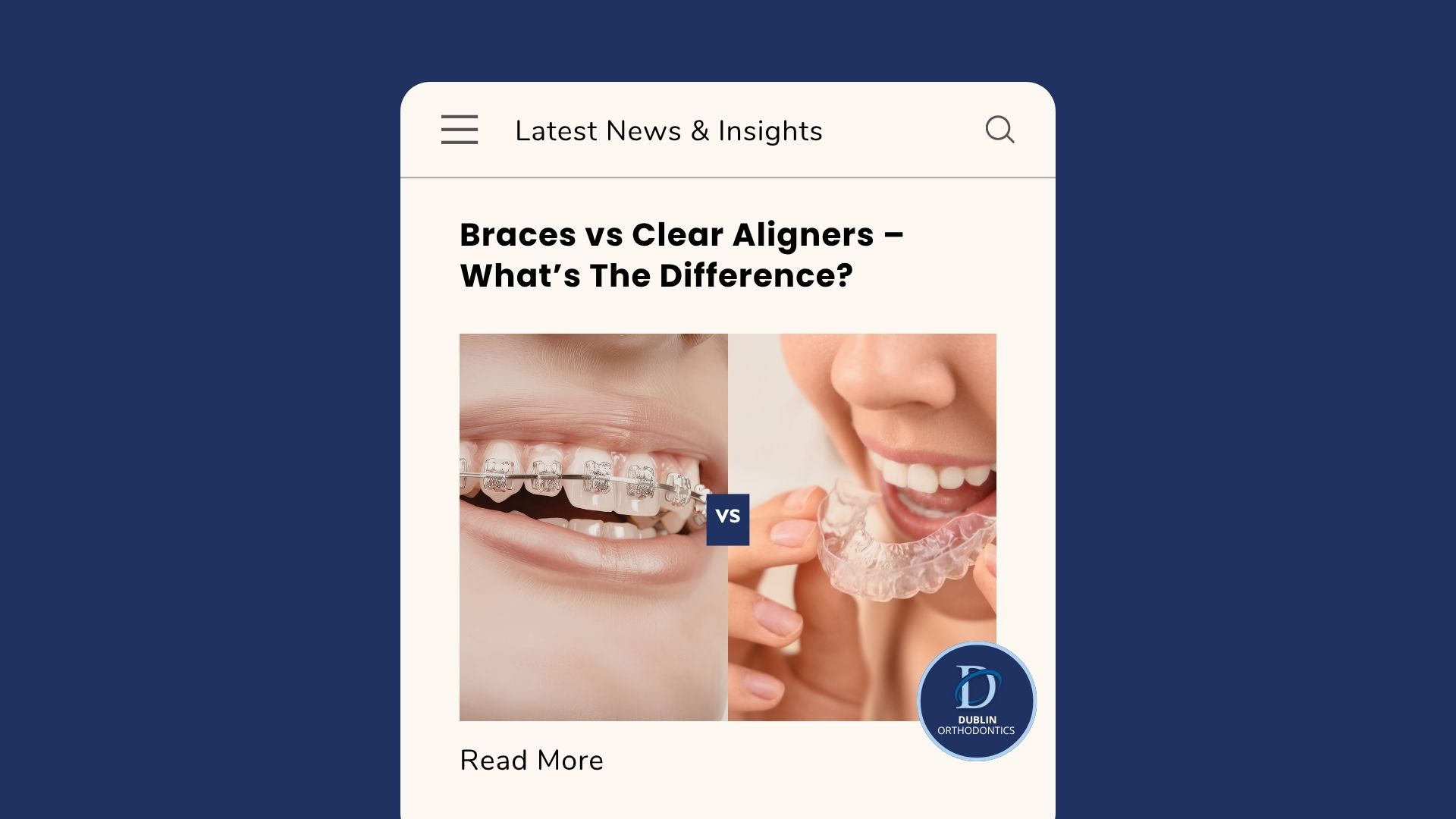
If you are thinking about straightening your teeth, one of the first decisions you will come across is whether to choose braces or clear aligners. It is a common question, and for good reason. Both options can deliver excellent results, but they work in different ways and suit different people, lifestyles and types of orthodontic problems.
For some patients, the answer is obvious from the start. They may already know they want something as discreet as possible, or they may not mind how treatment looks as long as it is effective. For many others, though, the choice is not always that straightforward. You may be wondering whether aligners are as effective as braces, whether braces are faster, whether one option is more comfortable than the other, or whether your own teeth are even suitable for both.
At Dublin Orthodontics, this is something patients ask about every day. The practice offers a full range of modern orthodontic treatments across its clinics, including clear aligners, metal braces, ceramic braces and lingual braces, with treatment planned using digital scans and a clear consultation process. Dublin Orthodontics also places strong emphasis on transparent treatment planning, retainers and long-term results, which is important when comparing your options.
The good news is that there is no one-size-fits-all answer. The right treatment depends on your teeth, your bite, your goals, your routine and what matters most to you. In this guide, we will break down the key differences between braces and clear aligners so you can better understand which option may be right for you.
What Are Braces?
Braces are a fixed orthodontic treatment, which means they are attached to the teeth and work continuously throughout treatment. They move teeth gradually using brackets and wires, with adjustments carried out at review appointments.
At Dublin Orthodontics, fixed braces are available in several styles, including metal and ceramic. Metal braces are the more traditional option and are often chosen for their durability and effectiveness. Ceramic braces work similarly but use tooth-coloured brackets, making them a more discreet option for patients who want fixed treatment without the appearance of metal.
Because braces are fixed in place, they are often especially useful where detailed control of tooth movement is needed. Dublin Orthodontics presents fixed braces as a strong option for more complex cases, with review appointments typically every 6 to 8 weeks and treatment times often around 18 to 24 months, depending on the individual case.
What Are Clear Aligners?
Clear aligners are a removable orthodontic treatment made from a series of transparent trays that fit closely over the teeth. Each set of aligners is designed to make small planned movements, gradually guiding the teeth into the desired position.
Dublin Orthodontics positions clear aligners as a discreet alternative to braces, with treatment planned digitally using scans and customised aligners. Patients are usually advised to wear aligners for around 22 hours per day, changing them every 1 to 2 weeks, with review appointments typically every 8 to 12 weeks. Treatment time is often around 18 to 24 months, depending on complexity.
One of the biggest reasons patients are drawn to clear aligners is appearance. Because the trays are clear and removable, they are often seen as a more flexible and subtle treatment option, especially for adults and older teens.
The First Thing to Know - Both Can Work Very Well
One of the biggest misconceptions around orthodontic treatment is that one option is always better than the other. In reality, both braces and clear aligners can be highly effective when the case is suitable and when treatment is carefully planned.
The key is suitability. Some patients are suitable for more than one option. Others may be better treated with one specific type of appliance because of how their teeth and bite need to move. That is why a proper consultation matters.
Dublin Orthodontics has a clearly defined consultation and treatment planning process which includes digital photographs, a 3D scan, diagnostic records and a written treatment plan with timelines and costs. This helps patients understand what is possible before making a decision.
Appearance - Which Option Is More Discreet?
For many people, especially adults, appearance is one of the most important factors in choosing treatment.
Clear Aligners
Clear aligners are usually the most obvious choice for patients who want a discreet look. Because they are transparent and fit snugly over the teeth, they are much less noticeable than traditional braces in day-to-day life. This can make them especially appealing for work, social occasions or anyone who simply wants treatment to be less visible.
Braces
Braces are more visible, but that does not mean patients rule them out. Ceramic braces are designed to be less noticeable than metal braces because the brackets blend in more naturally with the teeth. For patients who want fixed treatment but still want a more subtle appearance, ceramic braces can be a strong middle ground.
There are also lingual braces, which are the only truly invisible fixed brace because they are placed behind the teeth rather than on the front. Lingual braces are different from both front-facing braces and aligners, but they are part of the wider conversation for patients who prioritise appearance.
So if discretion is your top priority, clear aligners may feel like the natural choice. But appearance alone should not decide treatment if another option would be more effective for your teeth.
Comfort - What Feels Better Day to Day?
Comfort is another major factor, and again, there is no universal answer. Different people experience treatment differently.
Clear Aligners and Comfort
Many patients find clear aligners comfortable because there are no brackets or wires. The trays are smooth, and because they are custom-made to fit the teeth, they often feel neat and controlled. There can still be pressure when changing into a new aligner, but that pressure is part of how the teeth move.
Braces and Comfort
Braces can cause some initial soreness or tenderness after they are fitted or adjusted, which is completely normal. Brackets can also take a little getting used to at first. Most patients adapt quickly, and over time, braces simply become part of daily life.
From a practical point of view, some patients find aligners more comfortable because they can be removed for eating and brushing. Others prefer braces because they do not have to think about putting them back in after meals or keeping track of wear time.
Lifestyle - Which Option Fits Better Around Daily Life?
This is often where the real difference shows up.
Clear Aligners Suit Patients Who Want Flexibility
Aligners are removable, which means you take them out to eat, drink anything other than water, brush and floss. That gives patients more freedom at mealtimes and means there are fewer food restrictions than with braces.
However, that flexibility comes with responsibility. Aligners only work properly when they are worn consistently. Dublin Orthodontics states that aligners should be worn around 22 hours a day. If they are left out too often, treatment can slow down or become less predictable.
For organised patients with a steady routine, that may be absolutely fine. For others, especially younger patients or anyone with a busy or unpredictable schedule, remembering to reinsert aligners every single time can become frustrating.
Braces Suit Patients Who Want a Set-It-and-Go Option
Braces are fixed to the teeth, so they are always working. You do not need to remember to wear them, take them out or put them back in. That can make them a better choice for patients who would rather not rely on self-discipline throughout treatment.
The trade-off is that braces require more food considerations and a bit more care when cleaning around brackets and wires.
Which Option Is Better for Complex Cases?
This is where professional assessment becomes especially important.
Metal braces are particularly well-suited to more complex cases, while lingual braces can treat complex cases, too. Clear aligners can treat a wide range of orthodontic concerns, but the level of complexity they can manage depends on the specifics of the bite and the tooth movement required.
In simple terms, if your teeth need relatively straightforward alignment, clear aligners may be a strong option. If more complex movements are involved or detailed bite correction is needed, fixed braces may offer greater control.
That does not mean aligners are only for mild cases. It simply means the most suitable option should be based on diagnosis, not preference alone.
Treatment Time - Are Braces Faster Than Aligners?
Patients often want to know which option is quicker, but treatment time depends more on the complexity of the case and the extent to which treatment is followed than on the appliance alone.
Clear aligner treatment typically lasts 18 to 24 months, depending on the case, while fixed braces often take the same amount of time.
At first glance, aligners may seem faster. But there is an important point here. Aligners depend heavily on patient compliance. If aligners are not worn for the recommended hours, treatment may take longer than planned. Braces, on the other hand, are always working because they are fixed in place.
So the better question is not just which option is quicker in theory, but which option is more likely to work consistently for you.
Cleaning and Maintenance
Both options require good oral hygiene, but they differ in how that looks day to day.
With Clear Aligners
Removing the trays to brush and floss makes cleaning your teeth feel more straightforward. The aligners themselves also need to be cleaned and properly cared for.
With Braces
Brushing with braces takes more care because you need to clean around brackets and wires thoroughly. It is very manageable, but it does require a bit more effort and attention. Patients are also usually advised to avoid foods that could damage the brace.
Neither option is necessarily easier for everyone. Some patients prefer the simplicity of brushing normally with removable aligners. Others prefer not having to keep removing and cleaning trays throughout the day.
Cost, Quotes and Payment Plans
Cost is another major part of the decision. Dublin Orthodontics does not position pricing as one-size-fits-all. Instead, treatment is quoted after assessment, with transparent pricing and payment plan options explained throughout the patient journey. We also emphasise that treatment plans are all-inclusive, covering appointments, x-rays, braces, and retention, with exceptions for repeated breakages due to negligence or lost retainers requiring replacement.
That is an important point because the real value of treatment is not just the appliance itself. It is the whole process, including diagnosis, monitoring, finishing and retention.
So when comparing braces and clear aligners, cost should always be looked at in context, not just as a headline number.
What Happens After Treatment?
This part matters more than many patients realise.
Whichever treatment you choose, the final stage is retention. Teeth can move after orthodontic treatment if retainers are not worn as advised. Dublin Orthodontics places strong emphasis on retainers, including immediate post-treatment scanning, a combination of fixed bonded retainers and removable retainers, and a clear long-term message around retaining results.
That means the right question is not only how to get your teeth straight, but how to keep them straight. Braces and aligners are both part of the journey, but retention protects the result you have invested in.
So - Which One Is Right for You?
If you want a treatment option that is discreet, removable and flexible, clear aligners may be an excellent fit, especially if you know you will wear them exactly as instructed.
If you want a treatment that is fixed, always working and often especially useful for more detailed or complex movements, braces may be the better choice.
If appearance matters but you still want a fixed treatment option, ceramic or lingual braces may also be worth considering.
The truth is that the best option is the one that suits both your orthodontic needs and your lifestyle. That is why the most useful next step is not guessing based on online advice, but having your teeth properly assessed.
At Dublin Orthodontics, the consultation process is designed to help patients understand their options clearly, with digital scans, clinical assessment, written treatment planning and transparent costs. So whether you are leaning towards braces or clear aligners, you can make the decision with real information rather than assumptions.

