
Overbite Treatment: Can Braces or Clear Aligners Help?

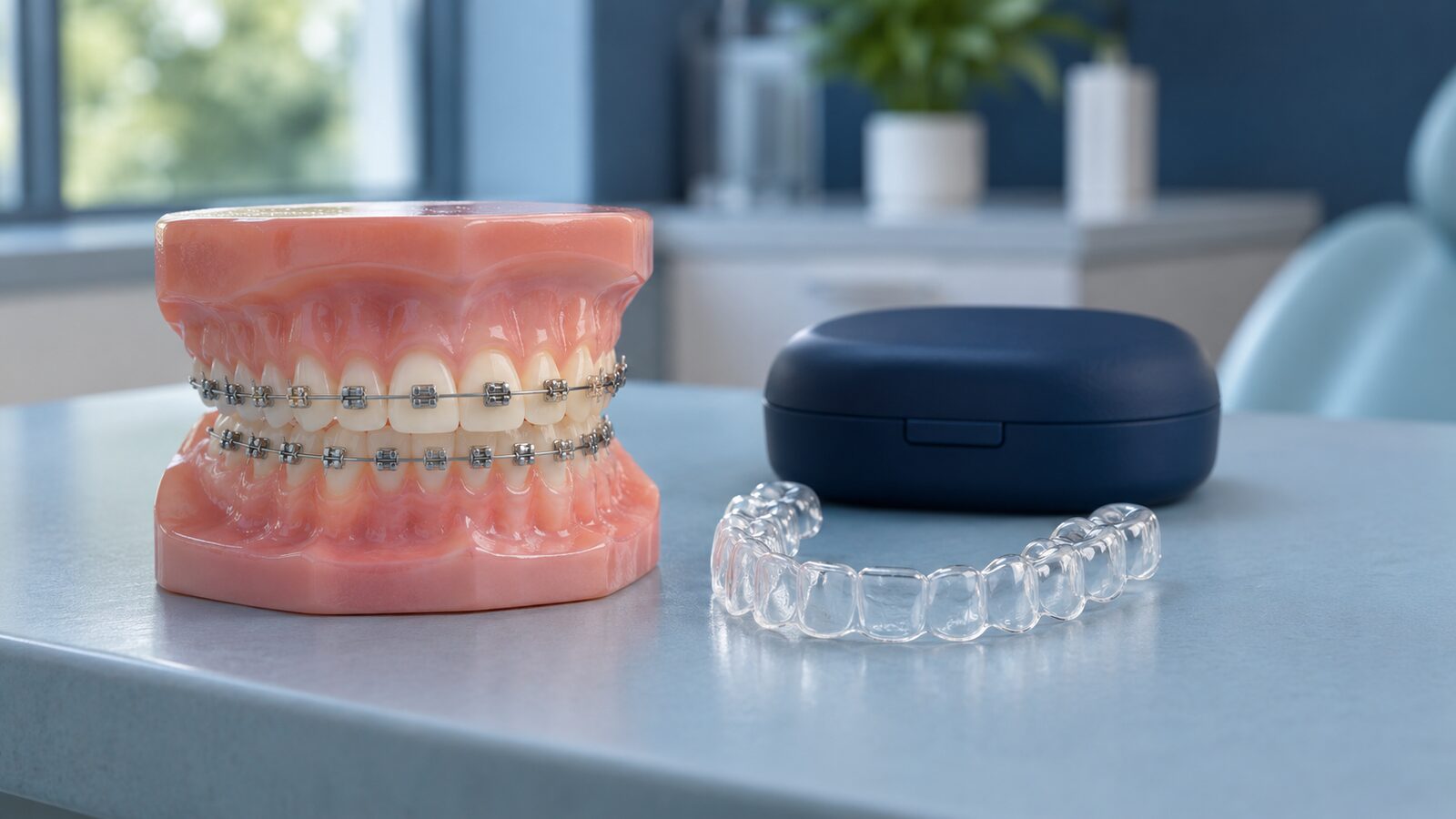
An overbite describes the vertical overlap of the upper front teeth over the lower front teeth. Some overlap is normal. The question is whether the amount of overlap, the position of the teeth or the relationship between the jaws is contributing to wear, discomfort, cleaning difficulties or concern about appearance.
You cannot judge the best treatment from a photograph alone. Your doctor needs to examine the teeth, gums and bite and determine whether the issue is mainly dental, related to jaw growth or a combination of both.
What is the difference between an overbite and an overjet?
The terms are often confused. Overbite refers mainly to vertical overlap: how far the upper front teeth cover the lower front teeth when you bite together. Overjet describes horizontal projection: how far the upper front teeth sit in front of the lower front teeth.
A person may have one or both. This distinction matters because the treatment mechanics can be different. A careful bite assessment is more informative than describing the front teeth as simply 'sticking out'.
What can cause a deep overbite?
An overbite can be influenced by the size and position of the jaws, tooth eruption, crowding, missing teeth, tooth wear and habits during development. Genetics can also influence facial growth and bite relationships.
In children and teenagers, the amount of growth remaining may affect the available options. In adults, the focus is usually on tooth movement and bite management, although severe jaw discrepancies sometimes require input beyond orthodontic appliances alone.
When might an overbite need treatment?
Treatment may be considered when the lower front teeth bite into or close to the palate, when the front teeth are wearing excessively, when cleaning is difficult, when the bite is unstable or when the patient is unhappy with the appearance. Not every overbite needs correction, and the need for treatment cannot be determined from a search result or self-measurement.
Seek an assessment if biting causes pain, teeth are chipping or wearing, the gums are being traumatised, or a child's bite appears to be changing asymmetrically.
Can braces correct an overbite?
Fixed braces can move teeth with precise, continuous control. Depending on the diagnosis, they may be combined with elastics or other appliances to change the relationship between the upper and lower teeth. They are often useful where rotations, crowding or detailed bite correction must be managed at the same time.
The exact plan depends on whether the overbite arises mainly from tooth position or from the jaws. Braces can move teeth, but they do not provide the same solution for every skeletal relationship.
Can clear aligners treat an overbite?
Clear aligners can treat some overbites by moving teeth in a planned sequence. Attachments and elastics may be used where additional control is required. They are not suitable for every bite, and success depends on wearing them for the prescribed hours each day.
Your doctor may recommend aligners, fixed braces or another approach after reviewing the amount of overlap, tooth positions, jaw relationship and your treatment priorities.
How are overbites treated in growing children?
For some growing patients, a functional appliance such as a Twin Block may be used to address a Class II bite relationship and prominent upper front teeth. This is different from simply straightening teeth with fixed braces. Cooperation and consistent wear are central to success.
Timing matters, so an early assessment can identify a developing problem while allowing your doctor to choose the most appropriate stage for treatment. An early visit does not automatically mean braces will start immediately.
What happens at an overbite consultation?
Your doctor will look at the teeth from the front and side, assess how the jaws close and discuss any symptoms or concerns. Digital photographs and a scan may be taken, while X-rays may be required later for detailed diagnosis and planning.
After assessment, you should receive a clear explanation of the problem, the realistic treatment options, expected responsibilities during treatment and the retention needed afterwards.
Different patterns of overbite
An overbite may be described as deep when the upper front teeth cover a large part of the lower front teeth. In some people, the lower teeth can contact the palate or gum behind the upper teeth. In others, the overlap is noticeable but does not cause trauma. The visible amount alone does not determine the treatment plan.
Your doctor also assesses the inclination of the front teeth, crowding or spacing, facial growth, tooth wear and the position of the back teeth. These details help distinguish a mainly dental problem from a jaw relationship that may need a different approach.
Why timing matters for children and teenagers
In a growing child, the treatment options may change as the jaws and teeth develop. An assessment can identify prominent teeth, a deep bite or a Class II relationship and decide whether monitoring or treatment is appropriate. Starting early is not always necessary; choosing the right stage is more important than starting as soon as possible.
If a functional appliance is recommended, cooperation is central because removable appliances need to be worn according to the prescribed schedule. Fixed braces may follow later to refine alignment and the way the teeth meet.
What happens after an overbite is corrected?
As with other orthodontic treatment, retainers are usually needed after active tooth movement. They help maintain the new tooth positions, but they do not remove the need for ongoing dental care or replace review of gum health and tooth wear.
Your doctor will provide a retention plan based on the treatment completed. Follow-up is particularly important if growth is continuing or if the original bite involved a significant jaw relationship.
Questions to ask about overbite treatment
Ask whether the problem is mainly dental or skeletal, what the treatment is intended to change and which aspects may remain. You can also ask why braces, aligners or a functional appliance is recommended, whether elastics are likely and how cooperation affects the result.
A good discussion should include realistic benefits, limitations, treatment responsibilities and retention. Avoid any provider that promises a specific result from photographs alone without examining the bite.
Will overbite treatment require extractions or surgery?
Many overbites are treated without jaw surgery, but it is not possible to predict the correct route from the amount of overlap alone. Space, crowding, facial profile, gum health, jaw relationship and the position of the front teeth all influence the plan. In selected cases, removing teeth may be considered to create space or manage protrusion; in others, space can be created or used in a different way.
Jaw surgery is generally considered only for significant skeletal discrepancies where tooth movement alone cannot achieve the intended functional relationship. If it may be relevant, your doctor will explain why and discuss referral and combined planning. The important point is that neither extractions nor surgery should be assumed simply because someone uses the word overbite.
Ask your doctor to explain the alternatives, the intended effect on the teeth and bite, and the limits of each approach. A properly informed choice requires diagnostic records and a discussion of benefits, risks and stability.
Frequently asked questions
Can an overbite get worse?
Bites can change with growth, tooth loss, tooth wear and movement over time. If you are concerned, an assessment is more reliable than waiting for visible change.
How long does overbite treatment take?
It varies with age, diagnosis, complexity, appliance and cooperation. Your doctor can estimate timing only after assessing the bite.
Do all overbites require braces?
No. Mild overlap may be normal and may not need treatment. Other cases may use aligners, functional appliances, fixed braces or a combined approach.
Can adults have an overbite treated?
Yes, many adult overbites can be improved. The suitable approach depends on dental health and whether the discrepancy is dental or skeletal.
Take the next step
If you are concerned about your bite, arrange a complimentary consultation at any Dublin Orthodontics clinic. Call 01 813 2321, contact the team online or start with a remote assessment.

